7 Questions to Ask Before Laparoscopic Surgery in India
Being advised to undergo laparoscopic surgery can raise many questions. Although laparoscopic surgery is a minimally invasive approach, it is still a major medical decision for many patients.
Before scheduling a procedure, it can be helpful to understand why surgery is recommended, whether laparoscopic treatment is appropriate for you, what risks may apply to your situation, and what recovery will involve.
Here are seven practical questions to discuss with your surgeon before laparoscopic surgery.
1. How much experience do you have with this specific procedure?
General surgical experience is important, but experience with the specific procedure you are considering can also be relevant.
A surgeon may perform many different laparoscopic operations, and experience can vary between procedures.
Ask your surgeon:
- How frequently do you perform this procedure?
- How long have you been performing it laparoscopically?
- Do you regularly treat patients with conditions similar to mine?
For complex or less common procedures, understanding the surgeon’s relevant experience can help you make a more informed decision.
2. Could the laparoscopic procedure need to be converted to open surgery?
In some situations, a laparoscopic operation may need to be converted to an open procedure.
This can happen because of unexpected bleeding, difficult anatomy, extensive inflammation, scar tissue from previous surgery, or other findings during the operation.
Conversion is not necessarily a complication or surgical failure. In some circumstances, converting to open surgery may be the safest option.
You can ask:
“How often does this procedure require conversion to open surgery, and what factors could make conversion more likely in my case?”
The answer will depend on the specific operation and your individual circumstances.
3. What surgical technology will be used?
Modern laparoscopic procedures use specialised cameras, instruments, and surgical equipment.
Depending on the procedure and hospital, technologies may include high-definition or enhanced visualisation systems and other specialised laparoscopic equipment.
However, advanced technology is only one part of surgical care. The most appropriate equipment depends on the procedure being performed and the surgeon’s clinical assessment.
Instead of simply asking whether the hospital has the latest technology, consider asking:
- What equipment will be used for my procedure?
- Why is it appropriate for my surgery?
- Is the procedure routinely performed using this equipment?
4. What will my recovery actually look like?
“Fast recovery” can mean different things to different patients.
Ask your surgeon about your expected recovery, including:
- How long will I need to stay in hospital?
- When will I be encouraged to walk?
- When can I return to normal daily activities?
- When can I return to office work?
- When can I resume physically demanding work or exercise?
- What restrictions should I expect?
- When will my follow-up appointment take place?
Recovery varies according to the procedure, surgical approach, overall health, and individual healing. Your surgeon can provide a more useful estimate based on your specific operation.
5. What risks are particularly relevant to my case?
Every operation has potential risks, but the risks are not identical for every patient.
Ask your surgeon which factors may affect your individual risk, such as:
- Existing medical conditions
- Previous abdominal surgery
- Obesity
- Medications
- Blood-thinning medication
- Age and general health
- The complexity of the procedure
Ask:
“What complications are particularly relevant to me, and what is done to reduce those risks?”
Understanding the individual risks and benefits can help you make an informed decision.
6. Can I take time to think about the decision or seek a second opinion?
For non-emergency surgery, patients should generally have an opportunity to understand their options before making a decision.
You can ask your surgeon:
“Can I take some time to consider my options or seek a second opinion?”
A second opinion may be particularly useful when:
- The surgery is major or complex
- You are uncertain about the diagnosis
- Several treatment options are available
- You are unsure whether surgery is necessary
- You simply want another medical perspective
For emergency conditions, delaying treatment to obtain another opinion may not be appropriate. Your doctor can advise you based on the urgency of your condition.
7. What is included in the total cost of surgery?
Before scheduling surgery, ask the hospital for a clear estimate of the expected costs.
Depending on the procedure, the total cost may involve:
- Surgeon fees
- Hospital charges
- Anaesthesia
- Operating theatre charges
- Investigations
- Medicines
- Medical supplies
- Hospital stay
- Follow-up consultations
You can ask:
“What is included in the estimate, and what additional costs could arise if my hospital stay or treatment changes?”
Understanding the expected costs in advance can help prevent unexpected financial difficulties.
Why These Questions Matter Before Laparoscopic Surgery
Laparoscopic surgery requires specific technical skills and careful patient selection. The complexity varies considerably between procedures.
A straightforward laparoscopic procedure and a complex revisional or advanced abdominal operation may require very different levels of surgical planning and expertise.
That is why patients should look beyond general claims about being an “experienced laparoscopic surgeon” and ask about experience relevant to their specific procedure.
The goal is not to find a surgeon with the highest number of operations. It is to find a surgeon whose experience and expertise are appropriate for your condition and treatment needs.
What Else Should You Discuss With Your Surgeon?
In addition to these seven questions, patients may want to discuss:
- Whether surgery is necessary
- Whether non-surgical alternatives are available
- Why laparoscopic surgery is being recommended
- Whether open surgery may be more appropriate
- Expected benefits of treatment
- Potential complications
- Anaesthesia
- Recovery and activity restrictions
- Follow-up appointments
- Warning signs that require medical attention
Writing down your questions before the appointment can help you remember important concerns during the consultation.
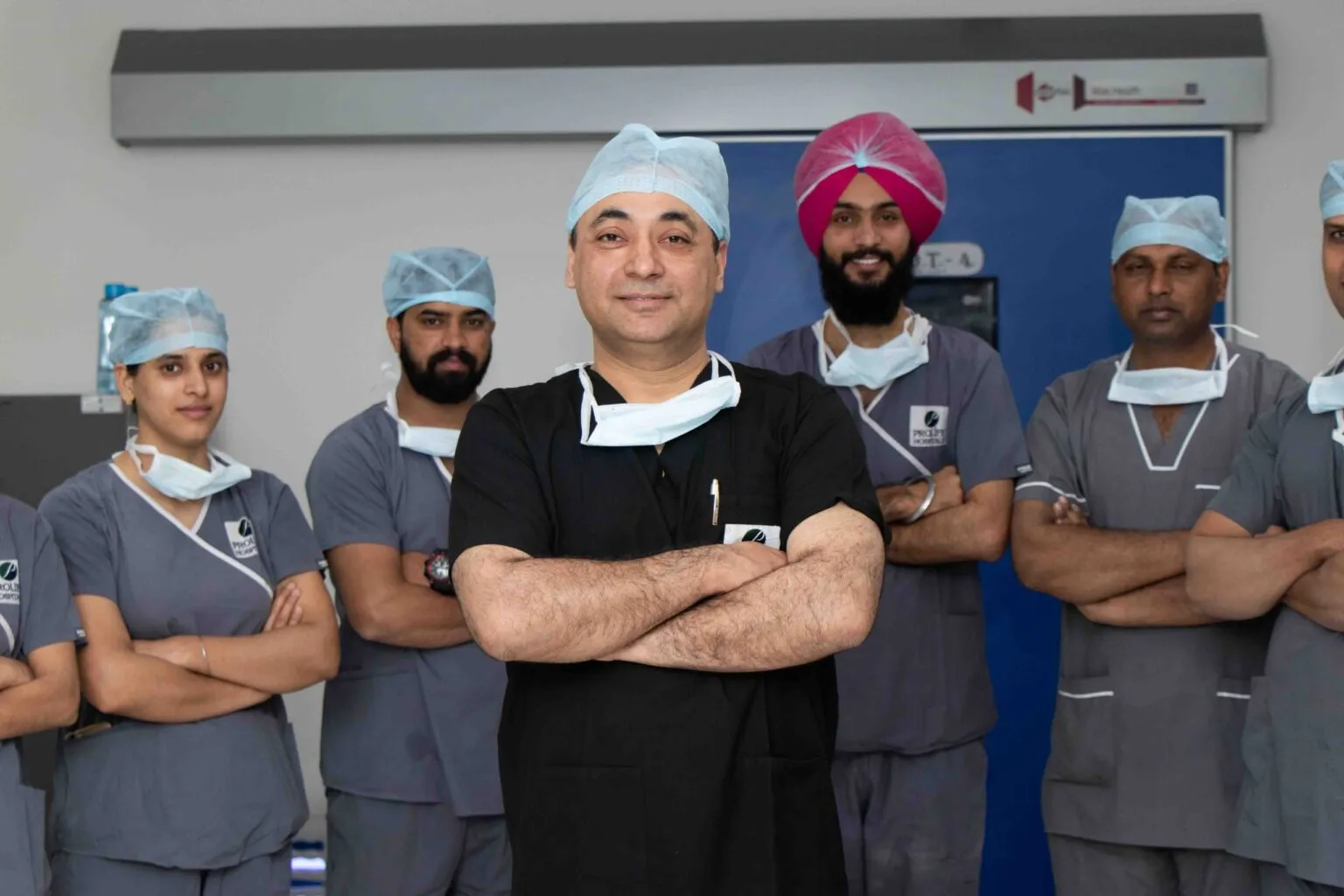
Dr. Harpreet Singh Jolly: Laparoscopic Surgical Expertise in Ludhiana
Dr. Harpreet Singh Jolly is a senior surgeon and the Director & Chief Consultant at Prolife Hospital, Ludhiana.
With more than 20 years of surgical experience and over 20,000 surgeries performed, Dr. Jolly specialises in advanced laparoscopic, bariatric, gastrointestinal, and general surgery.
His approach includes:
- Detailed patient evaluation
- Personalised treatment planning
- Discussion of surgical and non-surgical options
- Minimally invasive techniques when clinically appropriate
- Clear explanation of potential risks and benefits
- Pre-operative and post-operative care
- Follow-up guidance during recovery
Patients considering laparoscopic surgery can discuss their diagnosis, treatment options, procedure-specific risks, expected recovery, and other concerns during consultation.
Frequently Asked Questions
Is it appropriate to ask a surgeon how many procedures they have performed?
Yes. Asking about experience with a specific procedure is a reasonable part of an informed surgical consultation. You can ask how frequently the surgeon performs the procedure and whether they regularly treat patients with similar conditions.
Should I ask about conversion from laparoscopic to open surgery?
Yes. For procedures where conversion is a recognised possibility, it is reasonable to ask how often it occurs and what factors may increase the likelihood in your particular case.
Conversion is sometimes necessary to allow the surgeon to complete the operation safely and should not automatically be considered a complication.
Should I get a second opinion before laparoscopic surgery?
For non-emergency surgery, seeking a second opinion can be reasonable, particularly for major or complex procedures or when you are uncertain about your treatment options.
What if I do not understand something my surgeon explains?
Ask your surgeon to explain it again in simpler terms. You should feel comfortable asking questions about your diagnosis, treatment options, risks, benefits, and recovery.
If necessary, write down your questions before the consultation or bring a family member or trusted person with you.
When should I ask these questions?
Ideally, discuss these questions during your initial surgical consultation, before scheduling the operation. This gives you time to understand the recommendation, consider alternatives, and seek another medical opinion if appropriate.
Final Thoughts
Before undergoing laparoscopic surgery, patients should understand more than simply the name of the procedure.
Ask about the surgeon’s experience with your specific operation, why laparoscopic surgery is appropriate, potential risks, the possibility of conversion to open surgery, expected recovery, follow-up, and total treatment costs.
The goal is not to find the surgeon who makes the biggest claims. It is to find a qualified surgeon whose expertise and treatment approach are appropriate for your individual medical needs.
An informed consultation can help you understand your options and make a confident healthcare decision.