Laparoscopic vs. Open Surgery: What Ludhiana Patients Should Know
If you have been advised to undergo surgery for a gallbladder problem, hernia, obesity, or another condition, you may hear two terms during your consultation: laparoscopic surgery and open surgery.
Understanding the difference can help you have a more informed discussion with your surgeon.
Laparoscopic surgery is a minimally invasive approach that uses small incisions, a camera, and specialised instruments. Open surgery uses a larger incision to provide direct access to the area being treated.
Neither approach is automatically better for every patient. The most appropriate method depends on the condition, complexity of the procedure, previous surgeries, overall health, and the surgeon’s clinical assessment.
What Is Open Surgery?
Open surgery is performed through a larger incision that allows the surgeon direct access to the area being treated.
Open surgery remains an important part of modern surgical care and may be recommended when:
- The condition is complex
- The surgical area requires wider access
- The disease is extensive
- Previous surgery has caused significant scar tissue
- An emergency procedure requires rapid or extensive access
- Laparoscopic surgery is not considered appropriate
The size and location of the incision depend on the procedure.
Because the incision is generally larger than with laparoscopic surgery, recovery may involve more discomfort and a longer healing period in some cases.
What Is Laparoscopic Surgery?
Laparoscopic surgery is a minimally invasive technique performed through small incisions using a laparoscope, camera, and specialised surgical instruments.
The camera provides a magnified view of the surgical area on a monitor, allowing the surgeon to perform many procedures without making the larger incision associated with traditional open surgery.
For appropriately selected patients, laparoscopic surgery may offer potential benefits such as:
- Smaller surgical incisions
- Smaller scars
- Less postoperative discomfort
- Reduced blood loss in many procedures
- Shorter hospital stays for many procedures
- Faster recovery in suitable cases
- Earlier return to normal activities
The actual benefits and recovery time vary depending on the operation and individual patient.
Laparoscopic vs. Open Surgery: What’s the Difference?
The key differences relate to how the surgeon accesses the area being treated.
| Feature | Laparoscopic Surgery | Open Surgery |
|---|---|---|
| Incision | Usually several small incisions | Usually one larger incision |
| Surgical view | Camera and monitor | Direct visual access |
| Scarring | Generally smaller | Generally larger |
| Postoperative discomfort | Often less for suitable procedures | May be greater depending on procedure |
| Hospital stay | Often shorter for many procedures | May be longer depending on procedure |
| Recovery | Often faster for suitable procedures | May take longer depending on operation |
| Suitability | Depends on condition and patient | May be preferred for certain conditions |
This comparison is general. Your individual recovery can differ considerably depending on the procedure, health condition, and surgical findings.
What Are the Potential Benefits of Laparoscopic Surgery?
For appropriately selected patients, minimally invasive surgery may offer several advantages.
Smaller Incisions
Laparoscopic procedures generally use smaller access points than open surgery, which may result in smaller scars.
Less Postoperative Discomfort
Smaller incisions may result in less pain after some procedures, although pain varies considerably between patients and operations.
Earlier Mobility
When postoperative discomfort is lower and the surgeon considers it appropriate, patients may be encouraged to walk and resume light activity earlier.
Shorter Hospital Stay
Many laparoscopic procedures allow patients to leave hospital sooner than comparable open procedures, although the length of stay depends on the operation and recovery.
Faster Recovery in Suitable Cases
Some patients return to normal activities sooner after laparoscopic surgery than after open surgery. The exact recovery timeline depends on the procedure and individual healing.
Why Isn’t Every Surgery Performed Laparoscopically?
Laparoscopic surgery is not suitable for every patient or every condition.
Open surgery may be recommended when:
- The disease is extensive or complex
- The anatomy makes laparoscopic access difficult
- There is significant inflammation or infection
- Previous operations have caused extensive scar tissue
- The patient requires a procedure that is better performed through an open approach
- The surgeon determines that open surgery is the safer or more appropriate option
In some cases, an operation may begin laparoscopically and later be converted to open surgery.
Conversion can occur because of unexpected anatomy, bleeding, scar tissue, inflammation, or other findings. Conversion is not necessarily a complication—it may be the safest way to complete the operation.
Does Laparoscopic Surgery Require Special Expertise?
Laparoscopic surgery requires specific technical skills because the surgeon performs the operation using instruments inserted through small incisions while viewing the surgical field through a camera.
The level of expertise required varies according to the procedure.
Patients should therefore ask about the surgeon’s experience with the specific laparoscopic procedure they require rather than relying only on general surgical experience.
Important questions include:
- How frequently do you perform this procedure?
- Is laparoscopic surgery appropriate for my condition?
- What factors could make open surgery necessary?
- What are the expected benefits and risks?
- What recovery should I realistically expect?
Conditions Commonly Treated Using Laparoscopic Techniques
Laparoscopic techniques are used for many surgical conditions when clinically appropriate.
Examples include:
Gallbladder Stones
Laparoscopic cholecystectomy is commonly used to remove the gallbladder in patients who require surgery for symptomatic gallstone disease or other gallbladder conditions.
Hernias
Selected inguinal, incisional, umbilical, and other hernias may be repaired using laparoscopic techniques depending on the type and complexity of the hernia.
Bariatric Surgery
Procedures such as sleeve gastrectomy and gastric bypass are commonly performed using minimally invasive techniques when appropriate.
Appendicitis
Laparoscopic appendectomy is frequently used to remove the appendix in patients requiring surgical treatment for appendicitis.
Other gastrointestinal and abdominal procedures may also be performed laparoscopically depending on the patient’s condition.
What Should Ludhiana Patients Ask Before Surgery?
Whether your surgeon recommends laparoscopic or open surgery, consider asking:
Is laparoscopic surgery appropriate for my condition?
Ask why a particular approach is being recommended and whether other treatment options are available.
Why is open surgery recommended in my case?
If open surgery is being recommended, ask what factors make it more appropriate than a laparoscopic approach.
How experienced are you with this specific procedure?
Ask about the surgeon’s experience with the exact operation rather than only their overall surgical experience.
What is the possibility of conversion from laparoscopic to open surgery?
For procedures where conversion is possible, ask what circumstances may make it necessary.
What recovery should I expect?
Ask about hospital stay, pain management, walking, returning to work, exercise, diet, and follow-up appointments.
Choosing a Laparoscopic Surgeon in Ludhiana
If laparoscopic surgery is being considered, patients should look for a surgeon with relevant experience in minimally invasive procedures and, importantly, experience with the specific operation they require.
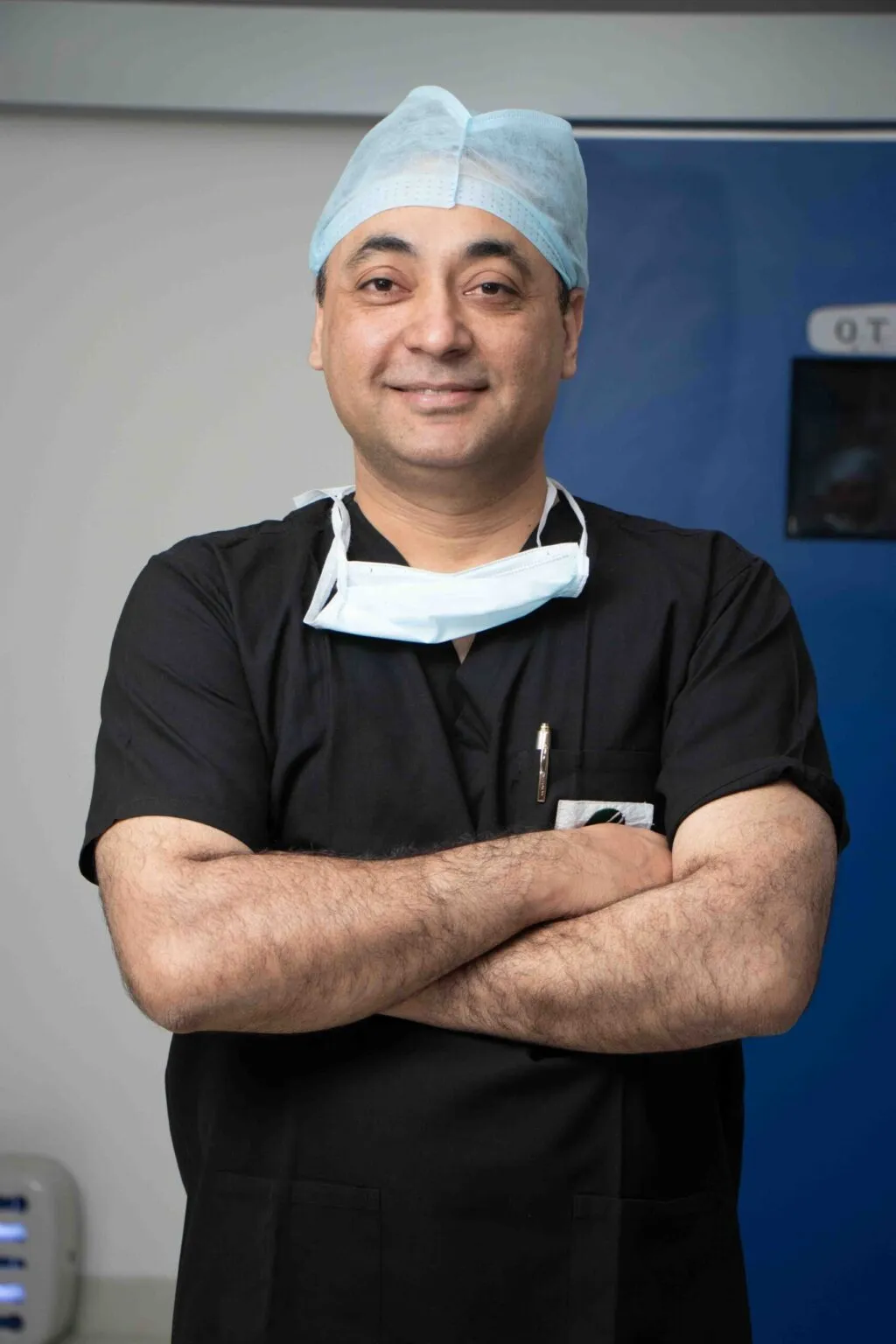
Dr. Harpreet Singh Jolly is a senior surgeon and the Director & Chief Consultant at Prolife Hospital, Ludhiana.
With more than 20 years of surgical experience and over 20,000 surgeries performed, Dr. Jolly specialises in advanced laparoscopic, bariatric, gastrointestinal, and general surgery.
His approach includes:
- Detailed patient evaluation
- Personalised treatment planning
- Minimally invasive techniques when clinically appropriate
- Clear discussion of treatment options
- Explanation of potential risks and benefits
- Pre-operative and post-operative care
- Follow-up guidance
Patients considering laparoscopic surgery in Ludhiana can discuss whether minimally invasive surgery is appropriate for their condition during a detailed surgical consultation.
Frequently Asked Questions
Is laparoscopic surgery always better than open surgery?
No. Laparoscopic surgery may provide benefits such as smaller incisions, less postoperative discomfort, and faster recovery for appropriately selected patients. However, open surgery may be the more appropriate option for certain conditions or complex procedures.
How do I know if I am suitable for laparoscopic surgery?
Your surgeon will evaluate your diagnosis, medical history, previous surgeries, overall health, anatomy, and the complexity of the procedure before recommending the most appropriate approach.
What happens if laparoscopic surgery needs to be converted to open surgery?
Sometimes an operation that begins laparoscopically needs to be converted to an open procedure. This can happen because of bleeding, inflammation, scar tissue, difficult anatomy, or other findings. Conversion may be necessary to complete the surgery safely.
Does laparoscopic surgery hurt less than open surgery?
Many patients experience less postoperative pain after laparoscopic surgery because the incisions are smaller. However, the amount of pain varies depending on the procedure, individual patient, and recovery.
Is recovery faster after laparoscopic surgery?
For many suitable procedures, patients may recover faster after laparoscopic surgery than after comparable open surgery. Recovery depends on the specific operation, overall health, and individual healing.
Does laparoscopic surgery cost more than open surgery?
Costs vary according to the procedure, surgeon, hospital, equipment, length of stay, investigations, and individual treatment requirements. Patients should ask the hospital for a procedure-specific estimate rather than assuming one approach will always cost more or less.
Can laparoscopic surgery leave scars?
Yes. Laparoscopic surgery still involves incisions, but they are generally smaller than those used for open surgery, so the resulting scars are usually smaller.
Final Thoughts
Laparoscopic and open surgery are both important surgical approaches.
For appropriately selected patients, laparoscopic surgery may offer advantages such as smaller incisions, less postoperative discomfort, and faster recovery. However, it is not suitable for every condition.
The most appropriate surgical approach depends on your diagnosis, the complexity of the procedure, previous surgeries, overall health, and your surgeon’s clinical assessment.
If you have been advised to undergo surgery, discuss both approaches with your surgeon and ask why a particular technique is being recommended for your individual situation.
An informed consultation can help you understand the benefits, risks, alternatives, and expected recovery before making a decision.