Hernia Surgery in Ludhiana: When Is Surgery Recommended?
A hernia can begin as a small swelling or discomfort that seems easy to ignore. For some people, it may cause few symptoms. For others, the swelling can become painful, interfere with everyday activities or gradually become more noticeable.
One of the most common questions patients ask is: When does a hernia need surgery?
The answer depends on the type of hernia, its size, symptoms, overall health and the risk of complications.
If you have been diagnosed with a hernia or have noticed a new abdominal or groin bulge, medical evaluation can help determine whether observation, lifestyle measures or hernia surgery in Ludhiana is appropriate.
What Is a Hernia?
A hernia occurs when an internal organ or tissue pushes through a weak area in the surrounding muscle or connective tissue.
Hernias commonly develop in the abdominal wall or groin, although they can occur in other areas.
Common types include:
- Inguinal hernia
- Umbilical hernia
- Incisional hernia
- Hiatal hernia
- Femoral hernia
The symptoms and treatment options can vary according to the type of hernia.
What Causes a Hernia?
A weakness in the abdominal wall can be present from birth or develop over time.
Factors that may contribute to the development of a hernia include:
- Age-related tissue weakness
- Previous abdominal surgery
- Repeated heavy lifting
- Chronic coughing
- Constipation and repeated straining
- Pregnancy
- Obesity
- Activities that increase pressure inside the abdomen
Having one or more risk factors does not mean that a person will definitely develop a hernia.
What Does a Hernia Feel Like?
The most noticeable symptom is often a bulge or swelling.
Depending on the location and type of hernia, a person may experience:
- A visible lump
- Groin swelling
- Abdominal swelling
- Pain or discomfort
- A feeling of pressure or heaviness
- Discomfort while lifting or straining
- Symptoms that become more noticeable when coughing or standing
Some hernias may cause very few symptoms.
That does not mean they should automatically be ignored.
When Should You See a Doctor?
A new lump or swelling in the abdomen or groin should be medically assessed, particularly if it persists.
You should consider seeking medical advice if:
- The swelling is becoming larger
- The area becomes painful
- The hernia interferes with normal activities
- You experience increasing discomfort while lifting or moving
- The swelling becomes difficult to push back
- Symptoms are becoming more frequent
A physical examination can help determine whether the swelling is likely to be a hernia and whether further evaluation is needed.
Does Every Hernia Need Surgery?
No.
The need for surgery depends on the individual situation.
Some small hernias with minimal symptoms may be monitored under medical guidance. Other hernias may be more likely to require surgical repair, particularly when they cause pain, increase in size or interfere with everyday activities.
A surgeon may consider factors such as:
- Type of hernia
- Size
- Symptoms
- Location
- Whether it is reducible
- Previous surgeries
- Overall health
- Risk of complications
The decision should be made after an appropriate clinical assessment.
When Is Hernia Surgery Recommended?
Surgery may be recommended when a hernia causes significant or persistent symptoms or when there is concern about complications.
Situations that may lead a surgeon to discuss surgery include:
Persistent Pain
Pain or discomfort that continues or affects normal activities may warrant treatment.
Increasing Size
A hernia that becomes progressively larger should be assessed.
Difficulty With Daily Activities
If lifting, walking, working or other everyday activities become uncomfortable, surgical treatment may be considered.
Recurrent Symptoms
Repeated discomfort or swelling can be a reason to discuss treatment options with a surgeon.
Complications
Certain hernias can become trapped or strangulated, which can be a medical emergency.
What Is a Strangulated Hernia?
A strangulated hernia occurs when the blood supply to the trapped tissue is compromised.
This can become a serious medical emergency.
Warning symptoms may include:
- Sudden or severe pain
- A hernia that becomes very tender
- A bulge that cannot be pushed back
- Red or discoloured skin over the swelling
- Nausea or vomiting
- Abdominal swelling
- Difficulty passing stool or gas
- Rapid worsening of symptoms
These symptoms require urgent medical attention.
Do not attempt to manage a potentially strangulated hernia at home.
What Is an Inguinal Hernia?
An inguinal hernia occurs in the groin area and is one of the most common types of abdominal wall hernia.
It may appear as a swelling in the groin or extend toward the scrotum in men.
Symptoms can become more noticeable with:
- Coughing
- Lifting
- Standing for long periods
- Physical activity
- Straining
Treatment depends on symptoms and clinical assessment.
What Is an Umbilical Hernia?
An umbilical hernia occurs near the belly button.
It can appear as a small or larger swelling around the navel.
Some umbilical hernias cause little discomfort, while others can become painful or increase in size.
An examination can help determine the appropriate management.
What Is an Incisional Hernia?
An incisional hernia can develop at or near the site of a previous abdominal surgical incision.
It occurs when the abdominal wall does not maintain adequate strength at the surgical site.
A swelling may become more noticeable when standing, coughing or straining.
Previous abdominal surgery is therefore important information to share with a surgeon during consultation.
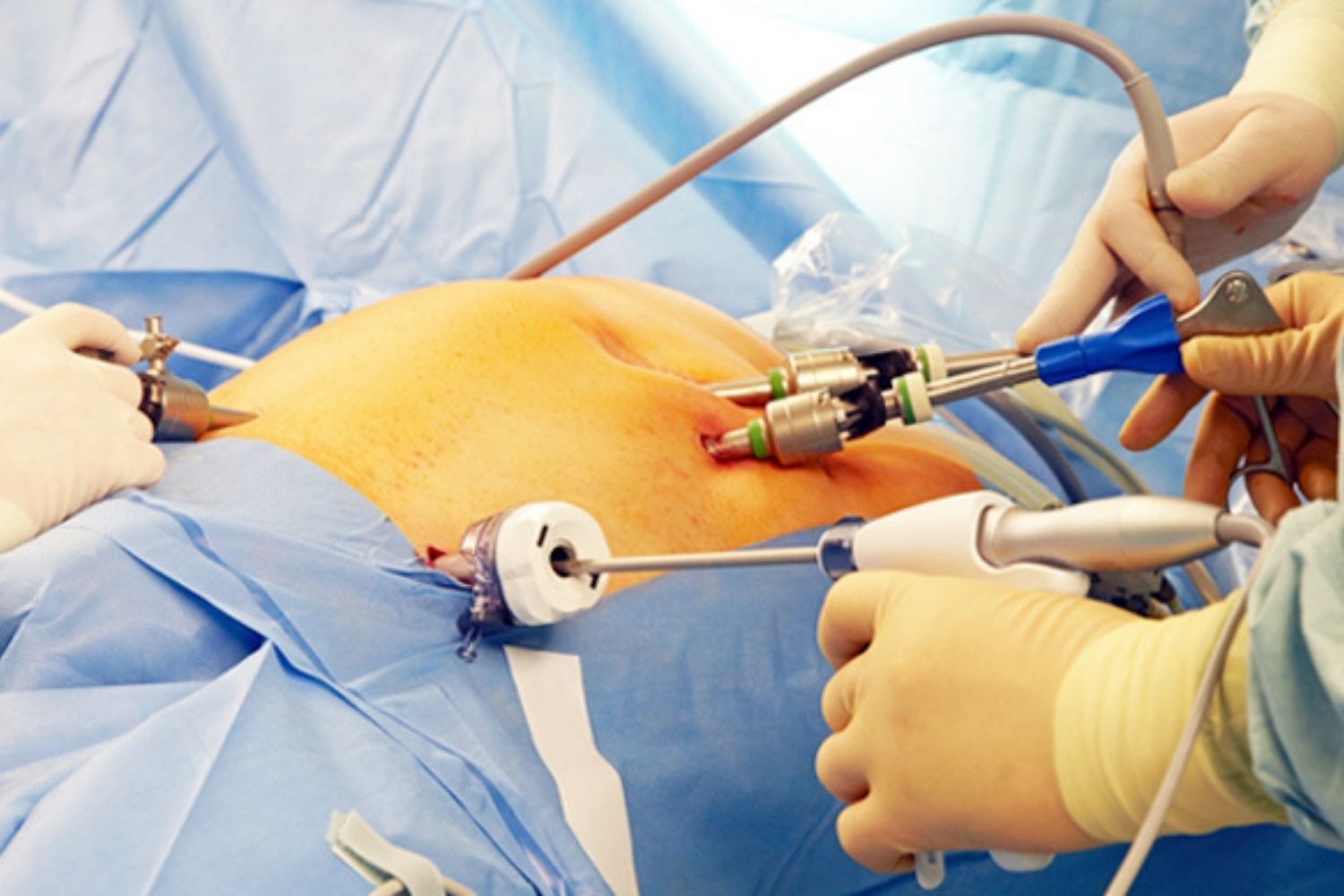
Laparoscopic Hernia Surgery
Depending on the type and circumstances of the hernia, laparoscopic surgery may be an option.
Laparoscopic surgery is performed through small incisions using a camera and specialised surgical instruments.
Potential advantages for appropriately selected patients can include:
- Smaller incisions
- Smaller scars
- Less postoperative discomfort in some cases
- Earlier mobility
- Shorter hospital stay for many procedures
- Recovery that may be faster than some open procedures
However, laparoscopic surgery is not suitable for every patient or every hernia.
The appropriate technique depends on the hernia, previous operations, overall health and the surgeon’s assessment.
Dr. Harpreet Singh Jolly’s surgical practice includes laparoscopic treatment of hernias as part of his gastrointestinal and laparoscopic surgical work.
Open vs Laparoscopic Hernia Surgery
Both open and laparoscopic techniques can be used to repair hernias.
Open Hernia Repair
The surgeon accesses the hernia through an incision over the affected area.
Laparoscopic Hernia Repair
The surgeon uses small incisions and a camera to perform the repair from inside the abdomen or abdominal wall, depending on the technique used.
Neither approach is automatically better for every patient.
The choice depends on:
- Type of hernia
- Size and location
- Previous abdominal surgery
- Whether one or both sides are affected
- Patient’s overall health
- Surgeon expertise
- Other clinical factors
Your surgeon can explain which approach is appropriate for your particular case.
Is Hernia Surgery Safe?
Hernia repair is a commonly performed surgical procedure, but like any surgery, it has potential risks.
Possible complications can include:
- Infection
- Bleeding
- Pain
- Recurrence
- Injury to surrounding structures
- Anaesthesia-related complications
- Other procedure-specific risks
The individual risk depends on the patient’s health and the type of procedure.
A proper consultation allows the surgeon to discuss the expected benefits and potential risks before treatment.
What Happens Before Hernia Surgery?
Before surgery, the doctor may review:
- Medical history
- Previous surgeries
- Current medicines
- Allergies
- Symptoms
- Hernia location and size
- Other health conditions
Depending on the patient’s age and health, preoperative tests may also be recommended.
Patients should tell their healthcare team about all medicines and supplements they take.
What Happens After Hernia Surgery?
Recovery varies according to the type of hernia, surgical technique and individual health.
After surgery, patients may receive instructions regarding:
- Wound care
- Pain medication
- Physical activity
- Lifting restrictions
- Diet
- Follow-up appointments
- Returning to work
Do not compare your recovery directly with another person’s. Follow the instructions provided by your surgical team.
How Long Does It Take to Recover From Hernia Surgery?
There is no single recovery time that applies to everyone.
Recovery depends on:
- Type of hernia
- Surgical technique
- Size and complexity of the repair
- Overall health
- Type of work
- Postoperative progress
Some patients return to routine activities relatively quickly, while others may need more time.
Your surgeon can give you more specific guidance based on the procedure performed.
What Should You Avoid After Hernia Surgery?
Your surgical team will provide individual instructions.
Generally, patients may be advised to avoid activities that place excessive strain on the repaired area until they are cleared to resume them.
This can include:
- Heavy lifting
- Strenuous exercise
- Certain abdominal exercises
- Activities that cause significant pain
Do not resume strenuous activity simply because the incision looks healed.
Internal healing also needs time.
Can a Hernia Come Back After Surgery?
Hernia recurrence is possible after repair.
The risk varies according to the type of hernia, surgical technique, patient factors and other circumstances.
Following postoperative instructions and attending recommended follow-up appointments can help the surgical team monitor recovery.
If a new swelling or persistent discomfort develops after surgery, discuss it with your doctor.
Can Lifestyle Changes Cure a Hernia?
Lifestyle measures may help reduce factors that increase abdominal pressure or improve general health, but they do not repair the underlying structural weakness responsible for a hernia.
Depending on the type of hernia, your doctor may discuss measures such as:
- Maintaining a healthy body weight
- Managing constipation
- Treating chronic cough
- Avoiding unnecessary heavy lifting
- Following medical advice regarding physical activity
These measures should not be considered a replacement for surgical evaluation when surgery is indicated.
Questions to Ask Before Hernia Surgery
If your doctor has recommended hernia repair, consider asking:
What type of hernia do I have?
Understanding the diagnosis is the first step.
Do I definitely need surgery?
Ask why surgery is being recommended and whether observation is an alternative.
Which surgical technique is appropriate?
Ask whether open or laparoscopic repair is suitable for your condition and why.
Will mesh be used?
Depending on the hernia and surgical technique, mesh may be recommended. Ask your surgeon why it is or is not appropriate.
How long will recovery take?
Ask about work, driving, exercise and lifting restrictions.
What are the potential risks?
Your surgeon should explain procedure-specific risks based on your health.
Hernia Surgery in Ludhiana: Choosing a Surgeon
When considering hernia surgery in Ludhiana, patients should look for a surgeon with relevant experience in abdominal and gastrointestinal procedures.
Important factors include:
- Surgical qualifications
- Relevant experience
- Experience with the type of hernia you have
- Access to appropriate hospital facilities
- Clear explanation of treatment options
- Preoperative and postoperative care
- A willingness to answer your questions
Dr. Harpreet Singh Jolly specialises in laparoscopic, gastrointestinal and bariatric surgery. His professional profile states that he has more than 20 years of surgical experience and has performed more than 20,000 surgeries.
His gastrointestinal surgery practice includes hernia treatment, including inguinal, umbilical and hiatal hernias.
Frequently Asked Questions
Does every hernia require surgery?
No. Some hernias with minimal symptoms may be monitored under medical guidance. Surgery may be recommended when symptoms, size, complications or other factors make repair appropriate.
When should a hernia be operated on?
Surgery may be considered when a hernia causes persistent pain, becomes larger, interferes with daily activities or presents a risk of complications. A surgeon should assess the individual case.
Can a hernia heal without surgery?
A hernia represents a structural weakness or opening in tissue. Lifestyle measures may help manage contributing factors, but they do not necessarily repair the hernia itself.
Is laparoscopic hernia surgery better than open surgery?
Neither technique is universally better. The appropriate approach depends on the type and location of the hernia, previous surgery, overall health and other clinical factors.
How long does hernia surgery recovery take?
Recovery varies between patients and depends on the type of hernia and procedure. Your surgeon can provide individual guidance regarding work, exercise and lifting.
Can I exercise with a hernia?
It depends on the type and severity of the hernia and the activities involved. Avoid activities that cause pain and discuss exercise with your healthcare professional.
What are signs of a hernia emergency?
Severe or rapidly increasing pain, a tender bulge that cannot be pushed back, vomiting, abdominal swelling or significant changes in the hernia may indicate a complication requiring urgent medical attention.
Can a hernia come back after surgery?
Yes. Recurrence is possible, although the likelihood varies according to the hernia, procedure and individual patient factors.
Final Thoughts
A hernia should not automatically be treated as an emergency, but it should not be ignored either.
A new or growing bulge, persistent pain, increasing discomfort or changes in a known hernia deserve medical evaluation.
Hernia surgery in Ludhiana may be recommended when symptoms, hernia characteristics or the risk of complications make surgical repair appropriate. For some patients, laparoscopic repair may be an option.
The best treatment approach depends on the individual patient. A qualified surgeon can examine the hernia, explain the available options and help determine whether surgery is necessary.
If you experience sudden severe pain, vomiting, a very tender or non-reducible swelling or rapidly worsening symptoms, seek urgent medical attention rather than waiting for a routine appointment.